Reflections on SAP Sapphire 2026
At SAP Sapphire 2026 in Orlando, CEO Christian Klein made something clear: SAP is no longer positioning itself as an ERP company with AI features. It is becoming a business AI company, full stop.
The centerpiece of that shift is the Autonomous Enterprise: a model where humans set direction and AI agents securely execute mission-critical workflows across finance, supply chain, procurement, and beyond. Joule Work, Joule Studio 2.0, the Business AI Platform. The infrastructure for this vision is being assembled in real time, and it is serious.
Reflecting on what we heard at Sapphire, one thing stood out above all else: the vision is right, and the gap it must cross to become real is exactly the problem Mirata was built to solve.
The gap in the vision
SAP’s core strength is well-earned. For decades, it has been the system of record for the most consequential data in the enterprise: financials, inventory, procurement, HR. When you need the truth about what your organization has done, SAP is where you look.
Joule will extend that foundation powerfully by reasoning over that data, surfacing patterns, and increasingly taking action on it.
But the ERP only sees what gets put into it. Work happens away from SAP: in the field, on the manufacturing floor, in labs, in maintenance bays, often performed by third-party contractors. The data generated by these processes — inspections, work orders, safety audits, quality checks — lives in paper forms, PDFs, spreadsheets, and disconnected point solutions.
This is not a criticism of SAP. It is simply the reality of how enterprises operate. The ERP was built to be the system of record, not the system of capture. Those are different problems.
Why this gap has persisted (and why AI makes it urgent)
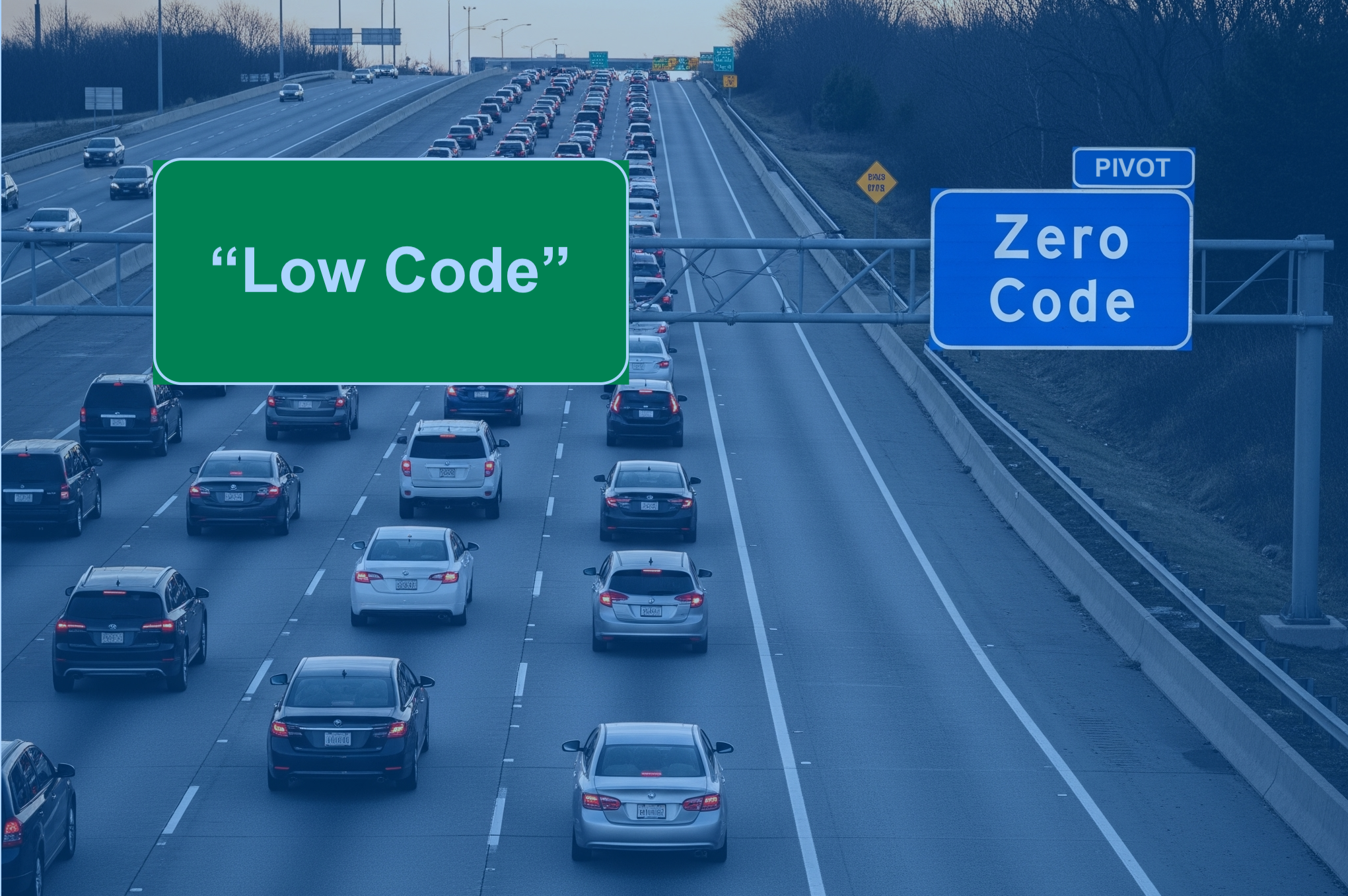
This data gap is not new. Enterprises have lived with it for years. The reason it has persisted is straightforward: it has historically been too expensive and too time-consuming to digitize these processes.
A formal digitization project — requirements gathering, custom development, testing, change management — costs too much and takes too long for the thousands of forms, checklists, and workflows that make up operational reality. So they stayed analog. Paper survived. Spreadsheets survived. PDFs survived.
AI changes the stakes entirely.
Joule can only orchestrate what it can see. An agent operating on an incomplete data picture does not just underperform, it makes confident decisions based on a partial view of reality. In a world where agents are executing mission-critical workflows, that is not a data quality issue. It is an operational and governance risk. The Autonomous Enterprise vision accelerates the urgency of solving this.
You cannot automate a process you have not captured.
How Mirata closes the gap
The critical difference is speed. The reason this data gap exists is that traditional digitization was too expensive and too slow. Mirata changes both.
Mirata rapidly digitizes work processes and captures the full picture: who performed the work, what data was collected, when and where the process occurred, and every step in between. We provide the complete process detail that agents need to act with accuracy and confidence.
At one large utility, 28 Maintenance Planners created over 400 Mirata forms in less than a month… all while performing their regular day jobs!
It’s not a migration project. It’s not a multi-quarter implementation. It is a fundamentally different model for how enterprises can close the gap between how work actually happens and what their AI layer can see. The data that was invisible to Joule last month does not have to be invisible next month.
And the data Mirata captures is not just structured for storage, it is structured for AI. The full process context: who collected what, in what sequence, under what conditions along with the full set of business rules that were in place at the time the process was executed. That is the input that transforms a capable AI assistant into a genuinely informed agent.
Why this matters across the entire SAP ecosystem
This is not a story about Mirata versus SAP. It is a story about what everyone needs to make the Autonomous Enterprise real:
- SAP needs faster adoption of its AI platform
- System integrators need shorter implementation timelines and lower project risk.
- Customers need both.
Mirata serves all three simultaneously by removing the digitization bottleneck that sits between operational reality and the AI layer SAP is building.
For system integrators specifically, Mirata compresses the scope of what has to be digitized in an implementation project. Processes that would otherwise require custom development can be digitized by the people who know them best — the operational teams themselves — in weeks. That changes the math on implementation cost and timeline in a meaningful way.
The more complete the data picture Joule works from, the more powerful and trustworthy it becomes. These are not competing bets. They are complementary ones.
The Autonomous Enterprise needs complete data
Christian Klein’s vision for the Autonomous Enterprise is the right one. AI agents executing mission-critical workflows, with built-in governance, at enterprise scale — that is where this is going, and SAP is building serious infrastructure to get there.
The organizations that arrive first will not be those with the best models or the biggest AI budgets. They will be those with the most complete operational picture and who have closed the gap between where work happens and where data lives.
Mirata bridges the gap between the promise of AI and the messy reality of collecting the data in the first place. We are here to make sure SAP can see everything it needs to see.
Let’s talk. We will show you how we digitize your process before your eyes.